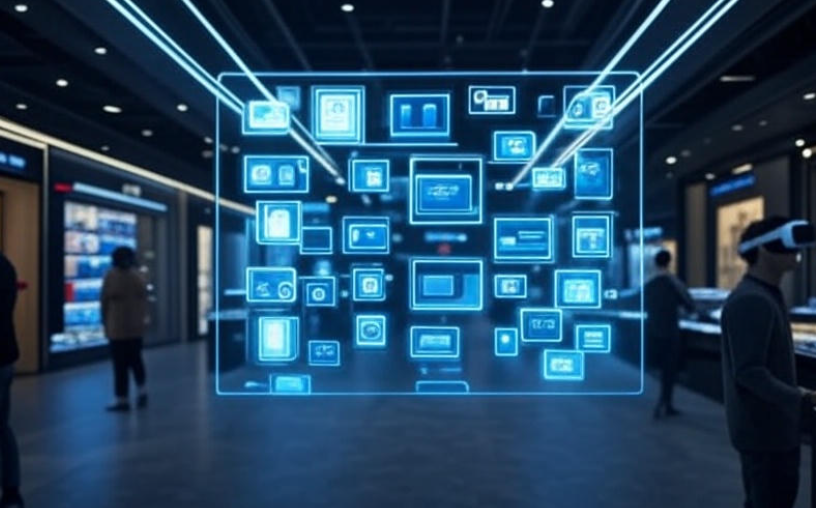

Shopping has always been about more than just buying things. People love the experience—the browsing, the feeling of trying on clothes, or walking through aisles filled with choices. But as the world moves deeper into the digital era, this experience is changing. One of the biggest shifts coming to our daily lives is virtual reality shopping, where you can walk through a store, pick items, and even check out—without leaving your couch. Now, pair this with digital payments, and you start to see a future where shopping feels like real life but happens entirely online.
What exactly is virtual reality shopping?
Virtual reality (VR) shopping is a new way of buying products using VR headsets or even 3D apps. Imagine putting on your headset and entering a virtual mall. You can walk through stores, pick up a product, look at it from all angles, and even see how it fits in your home using augmented reality tools. Once you like something, instead of pulling out cash or swiping a card physically, you use digital payments like e-wallets, crypto, or even voice-command payments right inside VR.
It’s like combining the comfort of online shopping with the immersive feeling of actually being in a store. 🛍️
Why does digital payment matter in VR shopping?
The backbone of VR shopping is not just the 3D visuals—it’s the payment systems that make buying seamless. Think about it: if you go through the trouble of walking through a virtual store but then have to exit the experience to pay on a website, the magic is gone. Digital payments make the checkout process quick, safe, and smooth.
Payments in VR can be:
-
Contactless (via connected bank accounts or wallets)
-
Cryptocurrency-based (for global use)
-
Biometric-enabled (face or fingerprint scans)
This is where VR and digital payments meet perfectly—convenience with innovation.
The rewards of VR shopping with digital payments
Like every innovation, this new system brings benefits that shoppers and businesses will love:
-
Immersive experience: Feels like real shopping without the travel.
-
Faster checkout: Payments are instant and integrated inside VR.
-
Global reach: You can buy from stores in another country as easily as from your local shop.
-
Personalization: Stores can suggest items based on your taste in real time.
-
Secure transactions: With blockchain, biometrics, and tokenization, payments are safer than traditional swipes.
The risks involved
Of course, no technology is perfect. With great innovation comes new risks too.
-
Security threats: Hackers may target VR wallets.
-
High costs: Not everyone can afford VR headsets yet.
-
Addiction and overspending: Immersive shopping might encourage impulse buying.
-
Data privacy: Tracking user movements in VR raises concerns.
-
Technology barriers: Not all countries have fast internet or advanced payment infrastructure.
A quick comparison: Traditional shopping vs VR shopping
| Feature | Traditional Shopping 🛒 | Virtual Reality Shopping 🎮 |
|---|---|---|
| Experience | Physical, limited by location | Immersive, global access |
| Payment | Cash or card | Digital wallets, crypto, biometrics |
| Convenience | Time-consuming travel | Shop anytime, anywhere |
| Personalization | Limited to sales staff | AI-driven suggestions |
| Security | Risk of card theft | Blockchain, tokenized payments |
How digital payments are shaping VR stores
The real magic is how payments blend into the VR shopping experience. For example:
-
You pick a jacket, look in a VR mirror, like it, and instantly say “buy” → payment deducted.
-
A grocery store in VR lets you scan items into a virtual cart, then auto-pay with your connected wallet.
-
NFTs and digital fashion items are bought with cryptocurrency directly inside the VR space.
It’s a future where shopping doesn’t break the flow of experience.
Who is investing in VR shopping right now?
Many big companies already see this as the next big thing:
-
Meta (Facebook) – building VR spaces like Horizon Worlds for shopping and payments.
-
Nike – launched Nikeland in Roblox, selling both digital and real-world products.
-
Walmart – experimenting with VR shopping and digital payment links.
-
Amazon – working on AR/VR experiences that could soon connect with Alexa-powered payments.
Even smaller startups are joining the race, creating virtual malls where hundreds of stores are connected to digital wallets.
What role will cryptocurrency play?
Cryptocurrency could become the main payment method in VR. Since VR shopping is global, currencies like Bitcoin, Ethereum, or stablecoins make sense because they remove borders. Imagine buying a Japanese gaming headset from Pakistan without worrying about currency conversion—crypto makes that smooth.
Also, digital goods (like NFT clothing or VR accessories) can only be bought with crypto. So, as VR expands, crypto will likely grow with it.
Will cash disappear in this future?
It’s unlikely that cash will vanish completely anytime soon, but in the VR world, cash has no place. You can’t hand over a paper note in a digital store. So, the shift is natural: VR will speed up the decline of physical cash and push societies toward full digital payment adoption. 💳
The human side of VR shopping
Technology aside, think about what VR shopping means socially. Elderly people who can’t travel, people living in rural areas, or those who want a safe shopping experience (without crowded malls) will benefit. It could also reduce carbon emissions by cutting down on travel for shopping trips.
But the other side is the danger of losing the “human touch” of shopping—chatting with a shopkeeper, feeling the fabric, or enjoying a day out with friends. That’s why VR shopping will probably complement, not replace, traditional shopping for now.
Future possibilities
Some experts believe that in the next 10 years, VR malls could feel almost indistinguishable from real ones. Imagine:
-
Haptic gloves that let you feel the fabric before buying.
-
AI-powered assistants guiding you like personal shoppers.
-
Seamless payments happening in the background without you even noticing.
This is where digital payments + VR = the next revolution.
FAQs
Q1: Is VR shopping already happening?
Yes, companies like Nike, Walmart, and Meta are already experimenting. It’s not mainstream yet, but it’s growing fast.
Q2: Do I need cryptocurrency to shop in VR?
Not always. Many platforms allow regular digital wallets or credit cards, but crypto is becoming common for global VR markets.
Q3: Is VR shopping safe?
The payments are as secure as the technology used. With blockchain and biometrics, it can be even safer than swiping a card. But hackers will always be a risk.
Q4: Will VR shopping replace malls?
Probably not entirely. People still love physical experiences. VR will likely exist alongside traditional malls as an alternative.
Q5: What equipment do I need?
A VR headset, internet connection, and a connected payment method (wallet, card, or crypto). Some experiences also work on mobile phones in 3D apps.
Final thoughts
Virtual reality shopping, powered by digital payments, feels less like a distant dream and more like a change knocking at our doors. The convenience, security, and immersive fun it offers are undeniable. Still, challenges around cost, privacy, and technology need to be solved.
Will VR shopping be the future of retail? Very likely. Will digital payments be its beating heart? Absolutely.
The real question is—are we ready to walk into a mall that exists only in pixels but feels just as real as the one down the street? 🌐🛍️