
Introduction: A new kind of security
If you’ve logged into your banking app recently, you may have noticed something different. Instead of typing long passwords or answering those “What’s your mother’s maiden name?” questions, the app might simply ask you to place your finger on the screen, look into your camera, or even speak a short phrase. This is biometric security at work—and it’s changing the way we bank online.
Biometric authentication uses unique human traits such as fingerprints, facial features, or voice to verify identity. And honestly, it feels like we’re living in the future. But beyond convenience, there’s a serious reason banks are investing in it: security.
Why traditional methods aren’t enough anymore
For years, online banking relied on things like passwords, PIN codes, and secret questions. They worked to some degree, but let’s be real—most people reuse passwords, write them down, or make them too simple. Hackers love this. And even two-factor authentication (like SMS codes) can be intercepted by cybercriminals.
That’s where biometrics steps in. Unlike a password, your fingerprint or face can’t easily be stolen or guessed. This makes them a much stronger line of defense.
What counts as biometric security in banking?
Biometric security isn’t just fingerprints anymore. Banks now use several forms of biometric data:
| Biometric Method | How it Works | Where You See It |
|---|---|---|
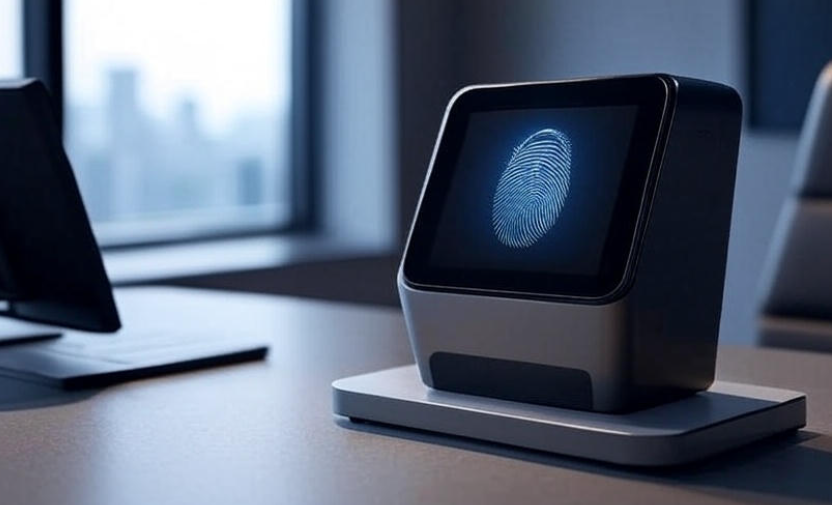
| Fingerprint Scan | Uses unique patterns of your finger | Mobile banking apps, ATMs |
| Facial Recognition | Analyzes facial structure | Banking apps, KYC verification |
| Voice Recognition | Recognizes unique vocal patterns | Phone banking, customer service |
| Iris/Retina Scan | Maps eye patterns | High-security banking systems |
| Behavioral Biometrics | Tracks typing speed, mouse movement, phone holding style | Background fraud detection |
Each of these methods brings different levels of convenience and protection. For example, a fingerprint unlocks an app instantly, while behavioral biometrics works silently in the background to detect suspicious activity.
The convenience factor
Let’s be honest—most of us hate remembering dozens of complex passwords. Biometric login makes banking smoother. Just a quick touch or glance and you’re in. No more typing, no more “Forgot Password” loops.
This convenience also helps banks because users are more likely to engage with digital banking when it’s quick and hassle-free. And in today’s competitive financial market, user experience is almost as important as security.
How biometrics improve security 🔒
Biometric security isn’t foolproof, but it raises the bar much higher for cybercriminals. Here’s how:
-
Harder to fake: Your fingerprint or iris is extremely difficult to replicate.
-
No sharing risk: Unlike a password, you can’t “tell” someone your fingerprint.
-
Continuous authentication: Some systems keep checking biometrics in the background (like the way you hold your phone).
-
Reduced phishing risk: Hackers can’t trick you into giving away your face or voice like they can with passwords.
Are there risks?
Yes, and it’s important to be realistic. Biometric data, once stolen, can’t be changed like a password. If a hacker somehow gets hold of your fingerprint data, you can’t “reset” your finger.
Privacy concerns are another issue. Some people worry about banks storing sensitive data like facial scans. However, most banks now use encrypted local storage (meaning your data stays on your phone, not a central database).
Biometric banking in action
Here are a few real-world examples of how banks are already using biometric technology:
-
Bank of America: Face and fingerprint login for mobile apps.
-
HSBC: Voice recognition for phone banking.
-
Wells Fargo: Eyeprint ID that scans unique eye vein patterns.
-
Standard Chartered: Fingerprint and facial login in Asia and Africa.
This shows it’s not just hype—banks worldwide are adopting it quickly.
The future of biometric banking 🚀
Biometric security is just the beginning. Banks are now exploring multi-biometric systems, where two or more biometric checks work together. For instance, logging in with a fingerprint but confirming high-value transfers with facial recognition.
Another trend is behavioral biometrics, which might sound like sci-fi but is already real. Imagine your bank app recognizing you by the way you swipe your phone, how fast you type, or even your walking pattern if you use wearable tech. That’s next-level protection.
Benefits for banks and customers
Biometrics is a win-win for both sides:
| For Customers 👩💻 | For Banks 🏦 |
|---|---|
| Faster logins | Stronger fraud prevention |
| No passwords to remember | Lower costs from fraud losses |
| Safer transactions | Improved customer trust |
| More personalized experience | Competitive advantage |
What makes biometrics better than passwords?
Think about it this way:
-
A password is something you know (and can forget).
-
A biometric is something you are (and carry everywhere).
That simple difference makes biometrics not just more secure but also more human-friendly.
But will cash and cards disappear?
Not anytime soon. Biometrics will mostly replace passwords and PINs, but cash and cards still have a strong presence. However, in the long run, we may see ATMs using facial scans instead of cards and transactions approved by your fingerprint instead of a PIN.
Quick myths about biometric banking
-
Myth: Hackers can easily copy fingerprints.
Reality: Copies don’t work with advanced sensors that detect depth and warmth. -
Myth: Banks store your biometric data on servers.
Reality: Most store it safely on your own device using secure chips. -
Myth: Biometrics are 100% safe.
Reality: Nothing is perfect, but biometrics are far stronger than passwords.
FAQs about biometric security in online banking
Q1: Is biometric login completely safe?
Not completely—no system is. But it’s much harder to hack than passwords or PINs.
Q2: What if someone hacks my fingerprint data?
In most banking systems, your fingerprint isn’t stored as an image. It’s converted into encrypted data, making it useless outside that system.
Q3: Do I need internet to use biometric login?
No. Most biometric checks happen on your phone itself, not online.
Q4: Can someone unlock my bank app with a photo of me?
Modern systems use advanced 3D scanning and “liveness detection,” so flat photos won’t work.
Q5: Will biometrics replace ATM cards?
Possibly in the future. Some banks are already testing ATMs that use fingerprint or facial scans instead of cards.
Conclusion: A safer future with a human touch
Biometric security is changing online banking in a big way. It makes banking easier, faster, and much more secure. Yes, there are risks and privacy debates, but the benefits outweigh the concerns.
At the end of the day, biometrics bring something refreshing to online banking—it feels natural. Instead of remembering random letters and numbers, you just use yourself: your face, your finger, your voice. And that, in many ways, is the future of trust in digital finance. 🌍💳🔐